
UN Binding Treaty on transnational corporations and human rights
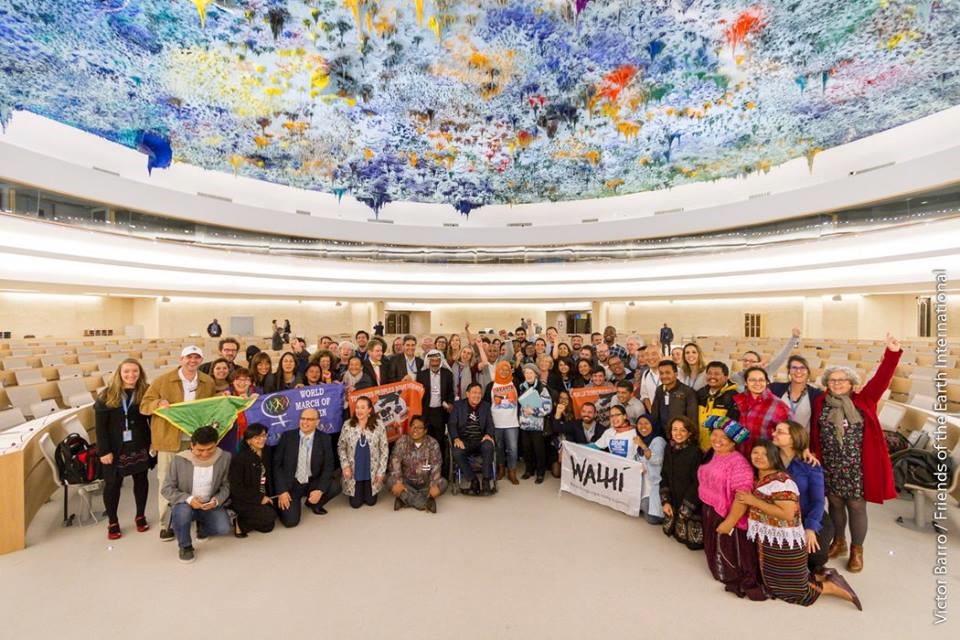
The need to confront the Architecture of Impunity
Why is the Global Campaign mobilized towards a UN Binding Treaty for Transnational Corporations on Human Rights?
Between transnational corporations, states and peoples, there is an undeniable asymmetry:
On one hand: with the complicity of states that are in that are interested in guaranteeing that they are “attracting investment”, transnational corporations have been covering themselves with a solid armour made up of free trade and investment protection agreements and their respective sanctioning mechanisms. Institutions such as the International Centre for Settlement of Investment Disputes (ICSID) constitute clear examples of the privatisation of justice, as well as any ISDS mechanism.
On the other hand, violations of human rights and the rights of peoples and nature have become inherent to transnational corporations operations, as well as systematic. But at the international level there is no binding rule for corporations on Human Rights.
In June 2014, the Human Rights Council finally adopted the resolution 26/9 on the elaboration of an International legally binding instrument on transnational corporations (TNCs) and other business enterprises with respect to human rights.
This was a historic achievement after decades of discussions and failed attempts within the United Nations. Such a legally binding Instrument is essential for two dimensions of the Global Campaign’s work: to end corporate impunity, and address the systemic power of transnational corporations which has reached unprecedented impacts on the daily lives of affected communities.
See at this link a brief presentation of the process
In short, our concrete proposals for the Treaty are the following:
- Scope of the Treaty: The target of this process is the power and impunity of TNCs and covering all Human Rights
- Primacy of human rights: The legally binding international instrument must reaffirm the hierarchical superiority of human rights norms over trade and investment treaties and develop specific state obligations in this regard (rejection of ISDS clauses)
- Direct obligations for transnational corporations: The Treaty needs to establish direct legal obligations for TNCs.
- Responsible solidarity: In order to cover all transnational activities, the Treaty shall cover all those activities along the supply chain of the TNC.
- To be binding, the Treaty needs to include an International Court and other compliance institutions
- Rights of affected persons and communities: The Treaty shall recognize the moral and legitimate authority of the persons and peoples affected by TNCs activities. Human Rights, Environmental Rights defenders and whistle blowers shall be protected.
- Protection from corporate capture: The Treaty shall include concrete measures against the influence of TNCs during the whole process of preparing, negotiating and implementing the future binding international instrument.
Related initiatives:
Website of the Treaty Alliance
Global Inter-Parliamentary Network for the UN Binding Treaty (GIN)